



cornea,Dry Eye,Eye Exam,Eye Health,Featured,Medical News,Medical Technology,Oculoplastics
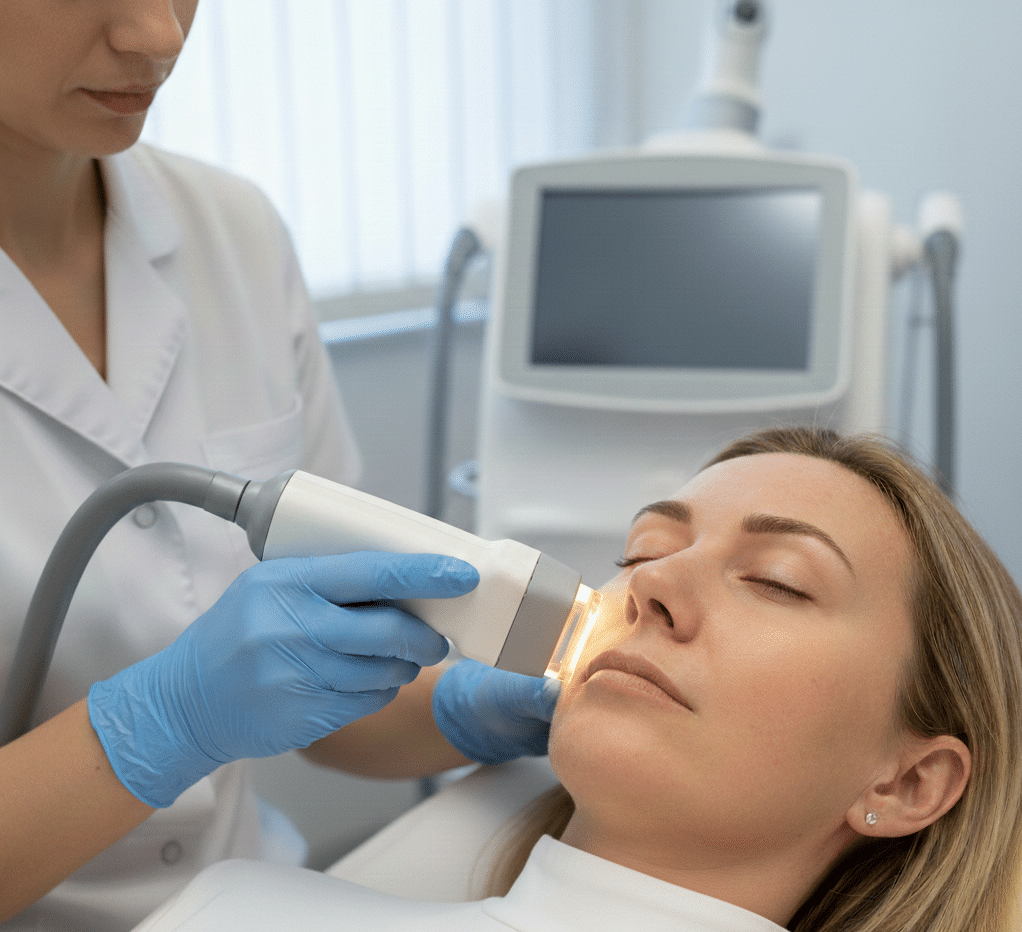
Ocular discomfort, redness, and fluctuating vision are common complaints among patients with rosacea. Yet, many don’t realize that their dry, irritated eyes may stem from ocular rosacea — a chronic inflammatory condition affecting the eyelids, meibomian glands, and ocular surface. At North Toronto Eye Care, we offer Intense Pulsed Light (IPL) therapy as an advanced, evidence-based treatment for patients whose dry eye is linked to rosacea-driven Meibomian Gland Dysfunction (MGD).
What Is Ocular Rosacea?
Ocular rosacea is the eye manifestation of rosacea and can occur with or without obvious facial redness. It affects both sexes and is most common after age 30. Because its signs overlap with dry eye disease, MGD, Demodex blepharitis, and recurrent styes, it is frequently underdiagnosed.
Common ocular rosacea signs and symptoms include:
- Red, thickened, or irregular eyelid margins
- Dilated, telangiectatic vessels along the lid margin
- Capped or blocked meibomian gland openings
- Foamy or “soapy” tears and rapid tear breakup
- Grittiness, burning, stinging, light sensitivity, and fluctuating vision
In more severe, untreated cases, chronic inflammation can lead to corneal neovascularization, thinning, scarring, and even ulceration, with potential vision loss.
How Rosacea Triggers MGD Dry Eye
Facial rosacea affects about 5% of the global population and is more common in fair-skinned individuals of Northern European ancestry, particularly women aged 30–60. It is driven by immune overactivation and vascular changes, including increased Toll-like receptor 2 (TLR2) activity, overproduction of cathelicidin, and VEGF-mediated abnormal blood vessel growth. These pathways promote inflammation, telangiectasia, and sensitivity of the eyelid skin and meibomian glands.
Demodex mite overgrowth and skin microbiome imbalance further amplify inflammation in many rosacea patients. As the meibomian glands become inflamed and dysfunctional, they produce poor-quality oil, leading to evaporative dry eye and a destabilized tear film. Common rosacea triggers that often worsen eye symptoms include sun exposure, heat, wind, temperature shifts, alcohol, spicy foods, and stress.
IPL: A Game-Changer for Rosacea-Related MGD
Intense Pulsed Light (IPL) therapy, originally developed for dermatologic rosacea, is now recognized as a gold-standard treatment for ocular rosacea and associated MGD.
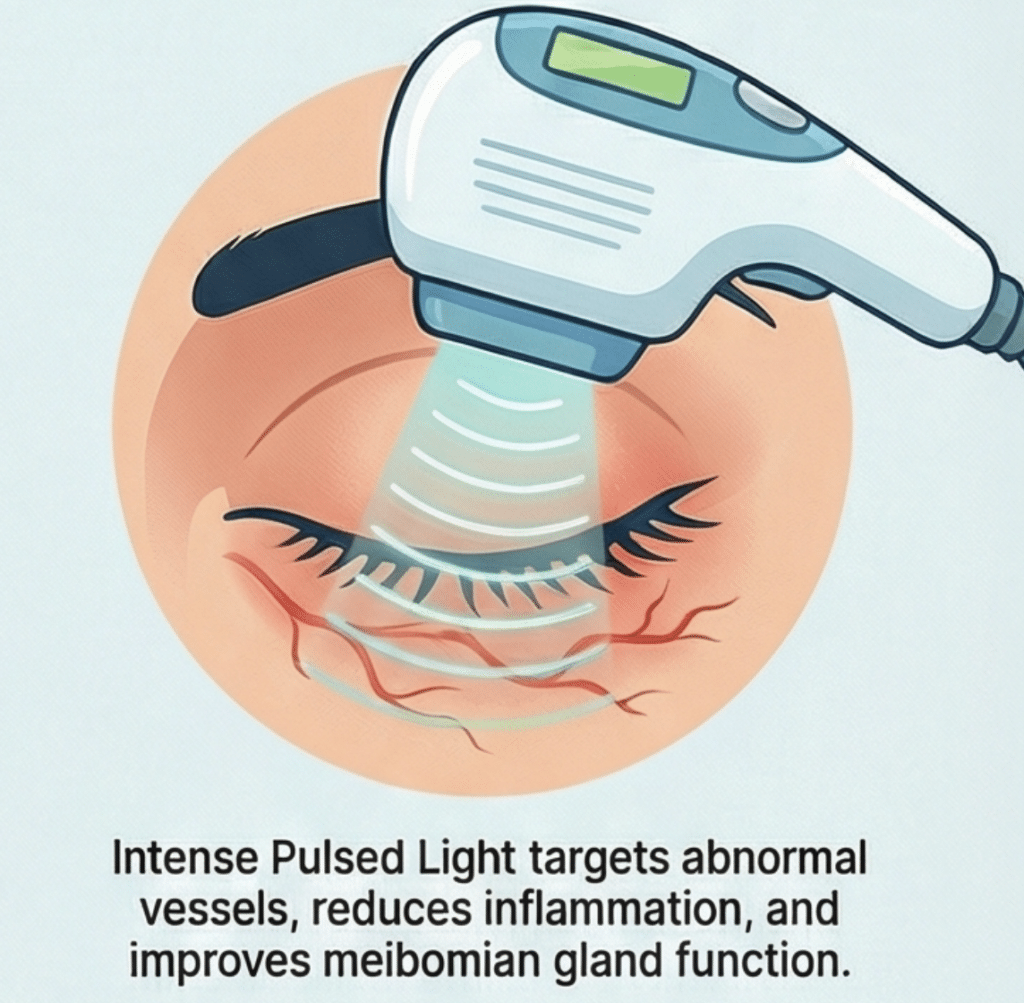
IPL uses gentle pulses of light applied to the skin just below the eyelids. This light energy:
- Targets and coagulates abnormal, dilated blood vessels that release inflammatory mediators
- Reduces Demodex mite overgrowth and bacterial load along the lash line
- Improves meibomian gland function by softening and restoring oil flow
- Decreases redness and inflammation on the eyelids and upper cheeks
After each session, many patients experience reduced redness, improved comfort, and better tear quality. Typically, a series of 3–4 treatments spaced a few weeks apart is recommended, with maintenance sessions as needed for long-term control.
Why Warm Compresses Aren’t Ideal for Ocular Rosacea
While traditional warm compresses are often recommended for MGD, they can worsen vascular dilation in patients with ocular rosacea, leading to increased redness and inflammation. IPL offers a safer and more precise alternative that directly addresses the underlying vascular and inflammatory components without exacerbating rosacea’s heat sensitivity.
Comprehensive Dry Eye Care at North Toronto Eye Care
At North Toronto Eye Care, our doctors specialize in diagnosing and treating rosacea-related dry eye using a multi-faceted, evidence-based approach that may include:
- IPL therapy for vascular and glandular normalization
- Topical immunomodulators (such as cyclosporine or lifitegrast)
- Oral anti-inflammatory agents (low-dose doxycycline)
- Management of Demodex infestations
- Lifestyle and dietary coaching (omega-3s, trigger avoidance, sun protection)
By targeting the root cause rather than just surface symptoms, our IPL dry eye treatment helps restore ocular comfort, reduce redness, and improve visual quality.
If you struggle with chronic red eyes, burning, or fluctuating dryness — especially if you have rosacea — our specialists can help determine whether IPL therapy is the right solution for you.
Schedule your dry eye consultation today at North Toronto Eye Care and experience advanced, customized care designed to bring your eyes back to comfort and clarity.
References
- https://eyewiki.org/Intense_Pulsed_Light_(IPL)_Therapy
- Seo KY, Kang SM, Ha DY, Chin HS, Jung JW. Long-term effects of intense pulsed light treatment on the ocular surface in patients with rosacea-associated meibomian gland dysfunction. Cont Lens Anterior Eye. 2018 Oct;41(5):430-435. doi: 10.1016/j.clae.2018.06.002. Epub 2018 Jun 27. PMID: 29958778.
- Shergill M, Khaslavsky S, Avraham S, Kashetsky N, Zaslavsky K, Mukovozov I. A Review of Intense Pulsed Light in the Treatment of Ocular Rosacea. J Cutan Med Surg. 2024 Jul-Aug;28(4):370-374. doi: 10.1177/12034754241254051. Epub 2024 May 28. PMID: 38804504; PMCID: PMC11403922.
- Forton FMN. The Pathogenic Role of Demodex Mites in Rosacea: A Potential Therapeutic Target Already in Erythematotelangiectatic Rosacea? Dermatol Ther (Heidelb). 2020 Dec;10(6):1229-1253. doi: 10.1007/s13555-020-00458-9. Epub 2020 Oct 23. PMID: 33095403; PMCID: PMC7649190.