
cornea,Dry Eye,Eye Exam,Eye Health,Medical News,What's New
Beyond Artificial Tears: Eye Drops Made From Your Own Blood
For millions of people, severe dry eye disease is more than a minor annoyance; it’s a chronic condition trapped in a debilitating feedback loop. For many, it isn’t just a lack of moisture; it’s a vicious cycle of tear instability and inflammation that standard treatments can’t break. Over-the-counter artificial tears often provide only fleeting relief from the burning, itching, and blurred vision, leaving patients searching for a more effective solution.
Enter autologous serum eye drops (ASEDs), a highly personalized treatment for managing severe ocular surface disorders. Prepared from a patient’s own blood, these drops represent a fundamental shift in dry eye therapy. Instead of simply adding moisture, ASEDs deliver a cocktail of biological growth factors designed to heal the ocular surface itself.
What are Autologous Serum Eye Drops?
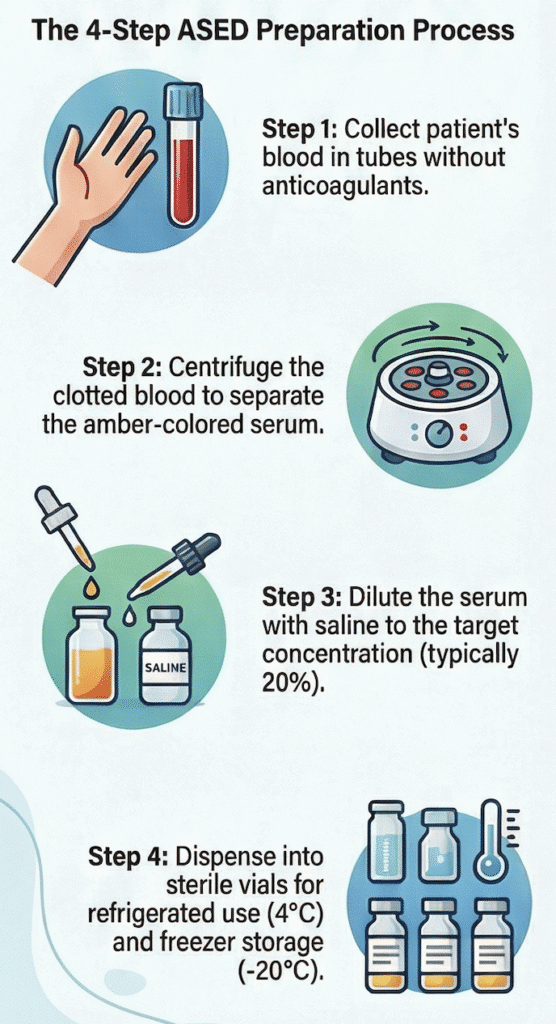
Autologous Serum Eye Drops are prescription eye drops made from a small sample of your own blood. The blood is processed in a sterile setting to separate the serum, which is then diluted into eye drops that closely mimic your natural tears. Because they come from your own body, ASEDs are highly biocompatible and tailored to your unique biology.
Who Might Benefit from ASEDs?
ASEDs are often recommended for patients with moderate-to-severe dry eye who continue to struggle despite using multiple lubricating drops, gels, or ointments. They can also be considered for complex ocular surface conditions, including persistent epithelial defects or nerve-related eye discomfort that does not match the usual signs of dryness. If your dry eye symptoms are constant, painful, or limiting your daily activities, this therapy may be an option.
How ASEDs Go Beyond Artificial Tears
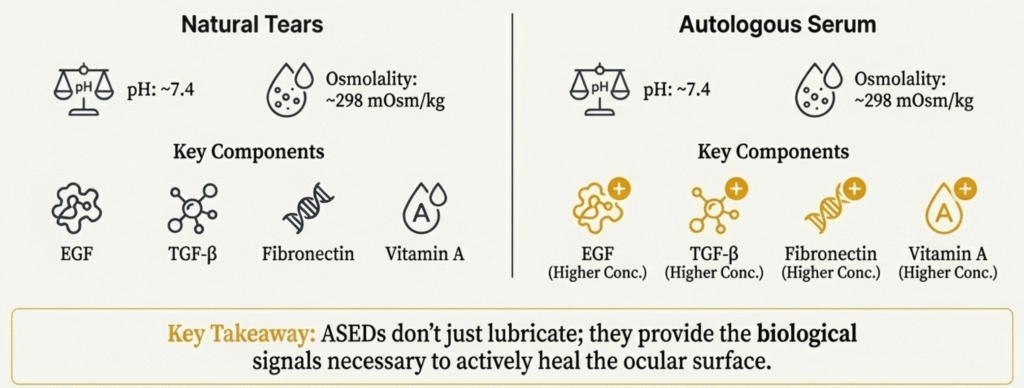
Regular artificial tears mainly add temporary moisture to the eye surface. Autologous serum, however, contains natural growth factors, vitamins, and proteins that support healing of the cornea and conjunctiva. Instead of only lubricating, ASEDs help repair the ocular surface, reduce inflammation, and improve tear film stability in more severe dry eye disease.
Evidence for Autologous Serum Therapy
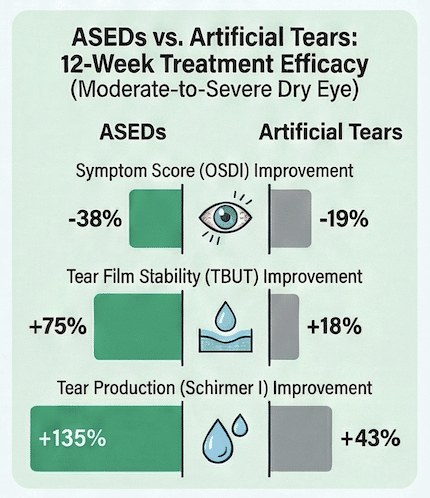
Clinical research over the past several years has shown that ASEDs can improve both symptoms and clinical signs of dry eye more effectively than standard artificial tears in many patients. Studies report better scores on dry eye questionnaires, longer tear break-up times, and less corneal staining when compared with conventional lubricants. This growing body of evidence supports the role of ASEDs in treating more advanced ocular surface disease.
Storage, Handling, and Safety
Because ASEDs are preservative-free and derived from your own blood, they require careful preparation and handling by an accredited centre. Vials in active use are kept refrigerated, and frozen vials can often be safely stored for extended periods when handled correctly. Your eye care team will review how to store, handle, and use the drops to maintain sterility and effectiveness.
Autologous Serum Eye Drops at North Toronto Eye Care
North Toronto Eye Care is an accredited Dry Eye Centre offering Autologous Serum Eye Drops as part of a comprehensive approach to dry eye management. If you have persistent dry eye symptoms or feel stuck relying on over-the-counter artificial tears with limited relief, our team can assess whether ASEDs are appropriate for you.
If you are interested in Autologous Serum Eye Drops or seeking treatment options beyond conventional lubricating drops, please contact North Toronto Eye Care to schedule a dry eye consultation.
References
- Vazirani J, Sridhar U, Gokhale N, Doddigarla VR, Sharma S, Basu S. Autologous serum eye drops in dry eye disease: Preferred practice pattern guidelines. Indian J Ophthalmol. 2023 Apr;71(4):1357-1363. doi: 10.4103/IJO.IJO_2756_22. PMID: 37026267; PMCID: PMC10276663.
- https://eyesoneyecare.com/resources/dews-3-in-practice-the-role-of-autologous-serum-tears-in-driver-based-therapy/
- Fischer KR, Opitz A, Böeck M, Geerling G. Stability of serum eye drops after storage of 6 months. Cornea. 2012 Nov;31(11):1313-8. doi: 10.1097/ICO.0b013e3182542085. PMID: 22955119.
- Jones L, Craig JP, Markoulli M, Karpecki P, Akpek EK, Basu S, Bitton E, Chen W, Dhaliwal DK, Dogru M, Gomes JAP, Koehler M, Mehta JS, Perez VL, Stapleton F, Sullivan DA, Tauber J, Tong L, Travé-Huarte S, Wolffsohn JS; TFOS Collaborator Group. TFOS DEWS III: Management and Therapy. Am J Ophthalmol. 2025 Nov;279:289-386. doi: 10.1016/j.ajo.2025.05.039. Epub 2025 Jun 2. PMID: 40467022.