



cornea,Dry Eye,Eye Exam,Eye Health,Featured,Medical News
For many people, allergy season means sneezing, congestion, and a runny nose. But allergies can affect more than your sinuses — they can also have a major impact on your eyes. If your eyes become itchy, red, watery, swollen, or irritated during certain times of the year, you may be experiencing ocular allergies, also known as allergic conjunctivitis. Ocular allergies are common, uncomfortable, and often frustrating because they can affect your ability to read, work, drive, use screens, or wear contact lenses comfortably.
The good news is that ocular allergies are usually manageable. With the right diagnosis and treatment plan, most patients can reduce symptoms and protect the surface of the eye from ongoing irritation.
At North Toronto Eye Care, we see many patients with red, watery, itchy, or irritated eyes. While allergies are a common cause, they are not the only cause — which is why a proper eye exam is important.
What Are Ocular Allergies?
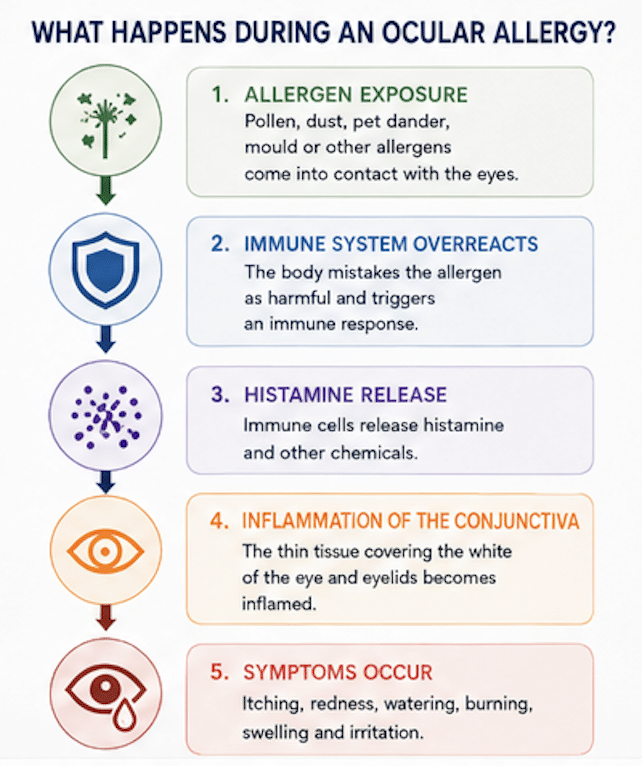
Eye allergies happen when your immune system overreacts to a substance that is usually harmless. These substances are called allergens.
Common allergens include:
- Pollen
- Dust mites
- Pet dander
- Mould
- Grass
- Ragweed
- Smoke or environmental irritants
- Certain cosmetics or skin care products
- Contact lens deposits or cleaning solutions
When allergens come into contact with the surface of the eye, the immune system releases inflammatory mediators such as histamine. Inflammation of the ocular surface is what leads to the classic symptoms of ocular allergies: itching, redness, tearing, burning, and swelling.
Common Symptoms of Ocular Allergies
Eye allergy symptoms can vary from mild to severe. Some patients notice symptoms only during spring or fall, while others experience irritation throughout the year.
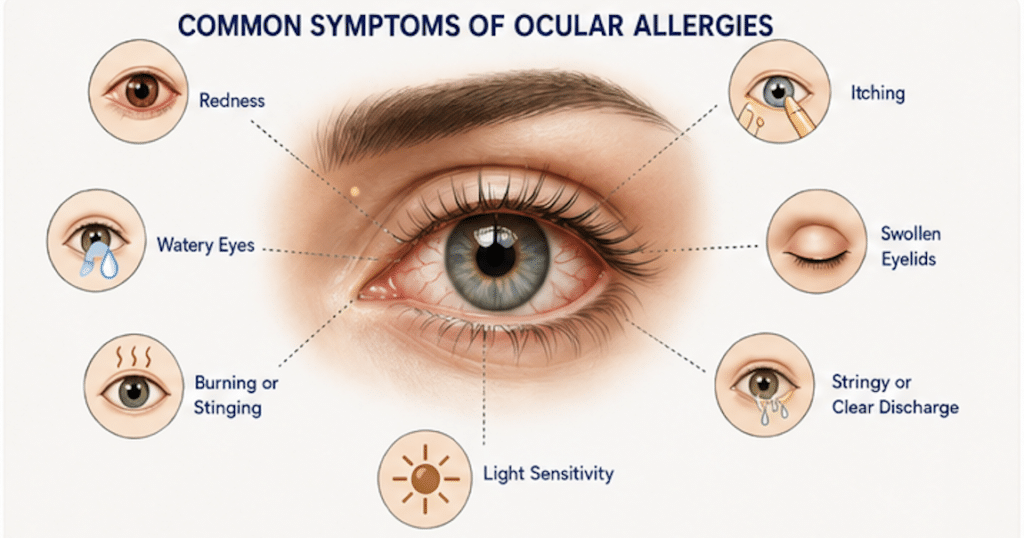
Symptoms include:
- Itchiness
- Redness
- Tearing
- Burning or stinging
- Puffy or swollen eyelids
- Stringy or clear discharge
- Light sensitivity
- Contact lens discomfort
- A gritty or foreign body sensation
- Fluctuating vision
Itching is one of the most important clues. While many eye conditions can cause redness or watering, intense itching is strongly associated with allergies. Eye allergies often occur in both eyes and may happen alongside nasal allergy symptoms such as sneezing, congestion, or a runny nose.
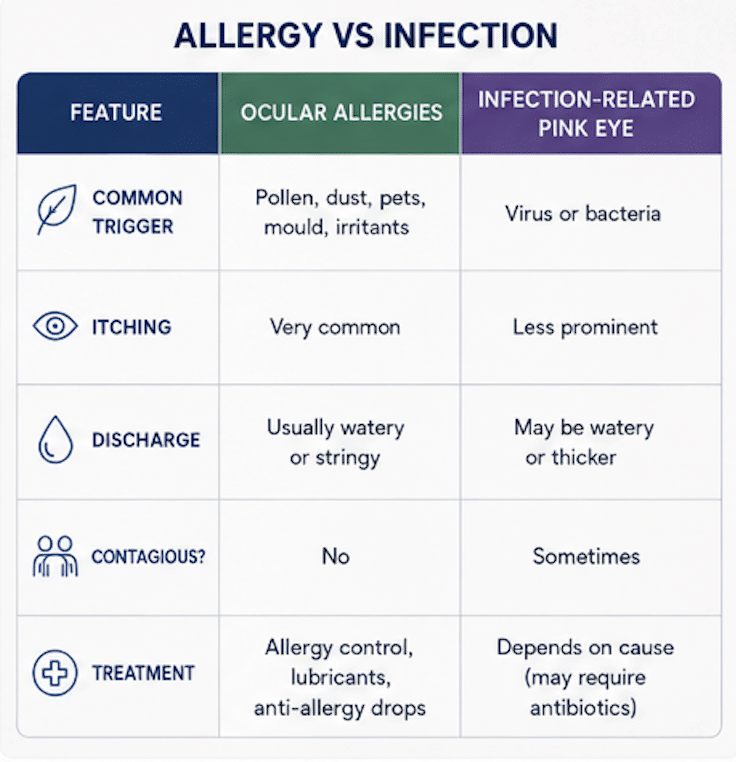
Are Ocular Allergies the Same as Pink Eye?
Allergic conjunctivitis or “ocular allergies” is a type of inflammation, but it is different from viral or bacterial infection, or more commonly called “pink eye” or “red eye”. Allergic conjunctivitis is caused by an allergic reaction and is not contagious. Viral and bacterial conjunctivitis, on the other hand, may be contagious and can spread from person to person.
This distinction matters because the treatment is different. Antibiotic drops do not treat allergies. Likewise, allergy drops will not treat a bacterial infection. Because red eyes can have many causes, it is best not to assume every red or watery eye is “just allergies.” An eye exam can help determine the cause and guide the right treatment.
How Allergies Can Affect the Surface of the Eye
The surface of the eye is delicate. When allergies cause inflammation, the tear film can become unstable, and the eyes may feel dry, watery, or irritated. This is one reason allergies and dry eye can overlap.
Allergies can also make patients rub their eyes frequently. While rubbing may feel good for a moment, it can worsen inflammation and irritation. In some patients, chronic eye rubbing may also contribute to eyelid swelling, irritation, and worsening symptoms.
For patients with existing dry eye, blepharitis, meibomian gland dysfunction, allergy season can make symptoms significantly worse.
Eye Allergies and Contact Lenses
Contact lens wearers may notice that allergy season makes their lenses feel uncomfortable much earlier in the day.
Allergens can stick to contact lenses, and lenses may also trap irritants against the surface of the eye. This can lead to redness, itching, watering, fluctuating vision, and a feeling that the lenses are dirty or dry.
If you wear contact lenses and have allergy symptoms, your eye doctor may recommend:
- Reducing contact lens wear during flare-ups
- Switching to daily disposable lenses
- Using preservative-free artificial tears
- Avoiding eye rubbing
- Reviewing your contact lens cleaning routine
- Treating underlying allergy or dry eye inflammation
Do not use medicated allergy eye drops with contact lenses unless your eye care provider confirms that it is safe to do so. Some drops require lenses to be removed for a period of time before reinsertion.
Treatment Options for Ocular Allergies
Treatment depends on the severity of symptoms and the health of the eye surface.
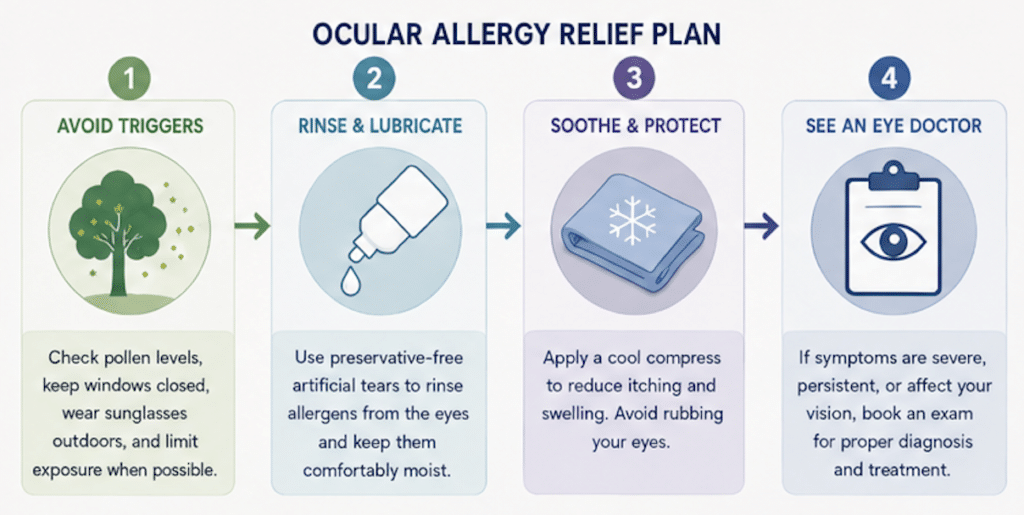
The key is matching the treatment to the cause. Persistent redness, pain, light sensitivity, discharge, or vision changes should not be self-treated without an exam.
You should book an eye exam if your symptoms are frequent, worsening, or not improving with basic measures.
What You Can Do at Home
Mild ocular allergy symptoms may improve with simple steps.
Helpful strategies include:
Artificial tears can be especially helpful because they dilute and rinse away allergens while improving comfort. However, not all eye drops are the same. Some “redness relief” drops can cause rebound redness or dryness if overused. If you are unsure which drops are appropriate, ask your eye care provider.
Protecting Your Eyes During Allergy Season
Ocular allergies can be annoying, but they should not be ignored — especially if they interfere with your daily life, contact lens wear, or vision.
With proper care, most patients can reduce itching, redness, watering, and irritation. The best treatment plan often combines allergen avoidance, ocular surface support, and targeted medication when needed.
At North Toronto Eye Care, our team can help determine whether your symptoms are due to allergies, dry eye, infection, inflammation, or another ocular condition. From comprehensive eye exams to advanced dry eye care and medical eye treatment, we are here to help you feel more comfortable and protect your vision.
References
- Cleveland Clinic. Allergic Conjunctivitis: Causes, Symptoms & Treatment.
- American College of Allergy, Asthma & Immunology. Eye Allergy.
- Mayo Clinic. Pink Eye, also called conjunctivitis: Symptoms, Causes, Diagnosis and Treatment.
- Canadian Ophthalmological Society. Canadian Ophthalmologists Highlight Seasonal Environmental Risks to Eye Health.
- Canadian Association of Optometrists. Eye Allergies.
- StatPearls / NCBI Bookshelf. Allergic Conjunctivitis.
- Chan C, Yu C. Allergic Conjunctivitis: Treatment Updates and Long-Term Management. Canadian Allergy & Immunology Today. 2023.