



Eye Exam,Eye Health,Featured,Medical News
Your eyes don’t simply help you see—they can also provide important clues about your overall health.
In some cases, the first signs of an autoimmune disease appear in the eyes before the rest of the body. Persistent dry eyes, unexplained eye pain, double vision, redness, or sudden vision changes may not simply be an “eye problem.” They can sometimes signal that the body’s immune system is attacking its own tissues.
At North Toronto Eye Care, our multidisciplinary team works closely with family physicians, rheumatologists, endocrinologists, and neurologists to diagnose and manage ocular complications associated with autoimmune diseases. Early recognition is essential—not only for protecting vision, but also for identifying underlying systemic disease.
1. Sjögren Syndrome
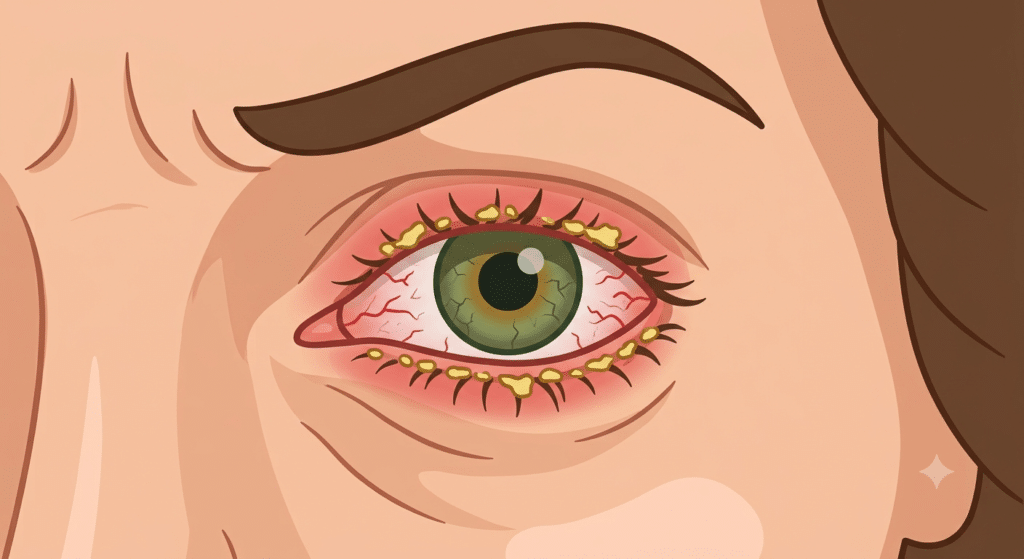
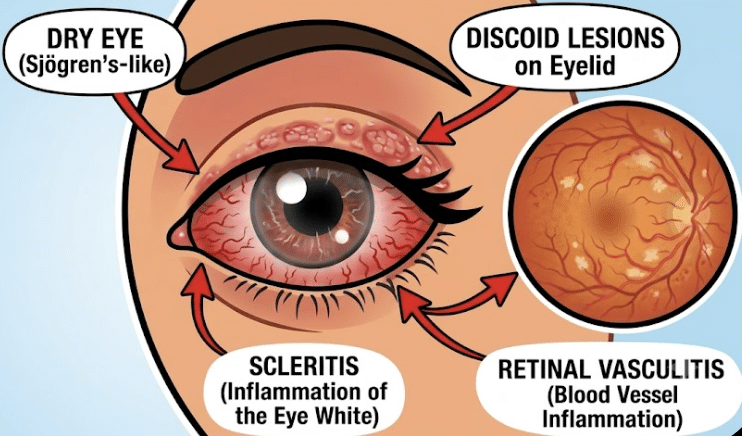
Sjögren syndrome is one of the most common autoimmune diseases affecting the eyes. The immune system attacks moisture-producing glands including the lacrimal glands, thus reducing tear production and leading to chronic dry eye disease.
Patients commonly experience:
- Burning eyes
- Grittiness
- Redness
- Light sensitivity
Many patients also have dry mouth, fatigue, and/or joint pain.
These patients often require more advanced dry eye management than artificial tears alone.
2. Rheumatoid Arthritis (RA)
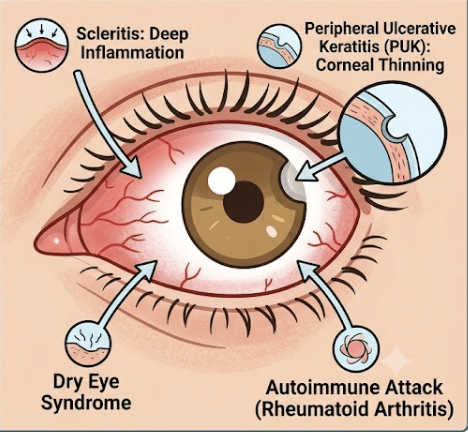
Rheumatoid Arthritis is a chronic autoimmune disease where the immune system attacks primarily the lining of the joints, leading to painful swelling, aching, and stiffness of small joints.
Common ocular complications include:
- Dry eye disease
- Episcleritis
- Scleritis
- Painful ulcers to the edge of the cornea
Among these, scleritis deserves particular attention. Scleritis is a deep and painful inflammation of the white part of the eye (sclera). Unlike simple conjunctivitis (“pink eye”), scleritis causes deep, severe eye pain that may worsen with eye movement.
Because untreated scleritis may threaten vision, urgent evaluation is essential.
3. Lupus (Systemic Lupus Erythematosus)
Lupus is an autoimmune disease where nearly every organ in the body—including the eyes are impacted. It causes inflammation that can damage the joints, skin, kidneys, heart, lungs and brain.
Possible ocular findings include:
- Dry eye disease
- Lupus Retinopathy
- Choroidopathy
- Optic neuropathy
In some patients, retinal changes may even reflect the severity of systemic lupus activity.
Regular comprehensive eye examinations are therefore an important part of long-term lupus management.
4. Thyroid Eye Disease (Graves’ Disease)
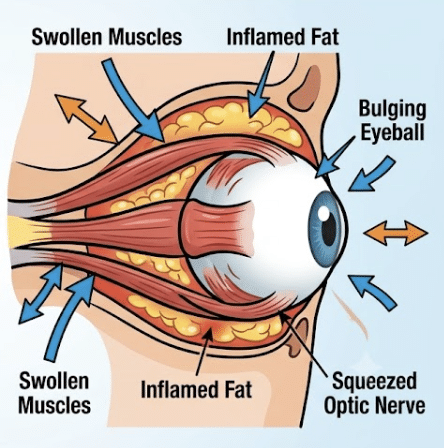
One of the most recognizable autoimmune eye diseases is Thyroid Eye Disease (TED).
Unlike many autoimmune conditions that affect the eye itself, TED primarily causes inflammation of the tissues surrounding the eye.
Symptoms may include:
- Bulging eyes
- Eyelid retraction
- Double vision
- Dry eye disease
- Light sensitivity
- Difficulty closing the eyes completely
Although most commonly associated with Graves’ disease, thyroid eye disease may occasionally occur even when thyroid hormone levels are normal.
Smoking is one of the strongest risk factors for developing more severe disease.
5. Multiple Sclerosis (MS)
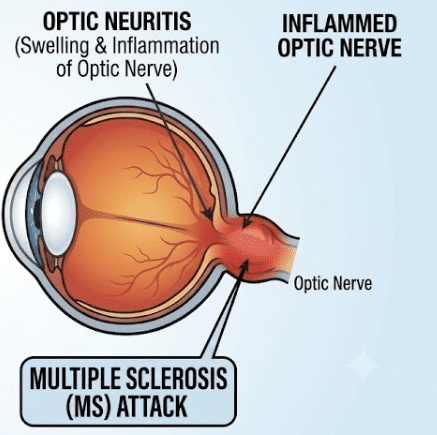
Multiple Sclerosis is an autoimmune disease of the central nervous system. As a result, for many patients, optic neuritis can be one of the first manifestation of multiple sclerosis.
Symptoms often include:
- Sudden blurred vision
- Pain with eye movement
- Reduced colour vision
- Central or side blind spots
How Are Autoimmune Eye Diseases Diagnosed?
Diagnosis often involves more than just examining the eyes.
Your doctor may recommend:
- Comprehensive eye examination
- Dilated retina examination
- OCT imaging
- Corneal staining
- Tear film evaluation
- Visual field testing
- Colour vision testing
- Blood work
- Imaging (MRI or CT)
- Referral to rheumatology, neurology, or endocrinology
Because autoimmune diseases can affect multiple organ systems, coordinated care is often essential.
Frequently Asked Questions
Protecting Both Your Vision and Your Health
Sometimes the eyes provide the earliest warning that something more is happening elsewhere in the body.
Persistent dry eye, unexplained redness, double vision, or eye pain should never be dismissed as “just getting older.”
At North Toronto Eye Care, our ophthalmologists and optometrists work together to diagnose and manage complex ocular inflammatory diseases while collaborating closely with rheumatologists, endocrinologists, neurologists, and family physicians. Our goal is not only to protect your eyesight, but also to help identify underlying systemic conditions that may benefit from early treatment.
If you’re experiencing persistent eye symptoms or have recently been diagnosed with an autoimmune disease, schedule a comprehensive eye examination. Early diagnosis can make a meaningful difference for both your vision and your overall health.
References
- EyeWiki – Ophthalmologic Manifestations of Autoimmune Diseases
- American Academy of Ophthalmology. Basic and Clinical Science Course: Uveitis and Ocular Inflammation.
- TFOS DEWS II Management and Therapy Report (2017).
- American College of Rheumatology Clinical Practice Guidelines.