




Aesthetics,Eye Exam,Featured,Medical News
Why is every eye color different?
Two people may both have blue eyes, but their irises can still differ in shade, pigment distribution and pattern. Eye colour is influenced by melanin—the brown pigment in the iris—and by many genetic factors that affect how pigment is produced and distributed.
Researchers have identified dozens of genetic regions associated with eye colour, but the science is not as simple as matching a child’s eye colour to either parent’s. A large study of nearly 193,000 people identified 124 associations across 61 genomic regions, including genes linked to pigmentation and iris structure.
How does melanin affect eye color?
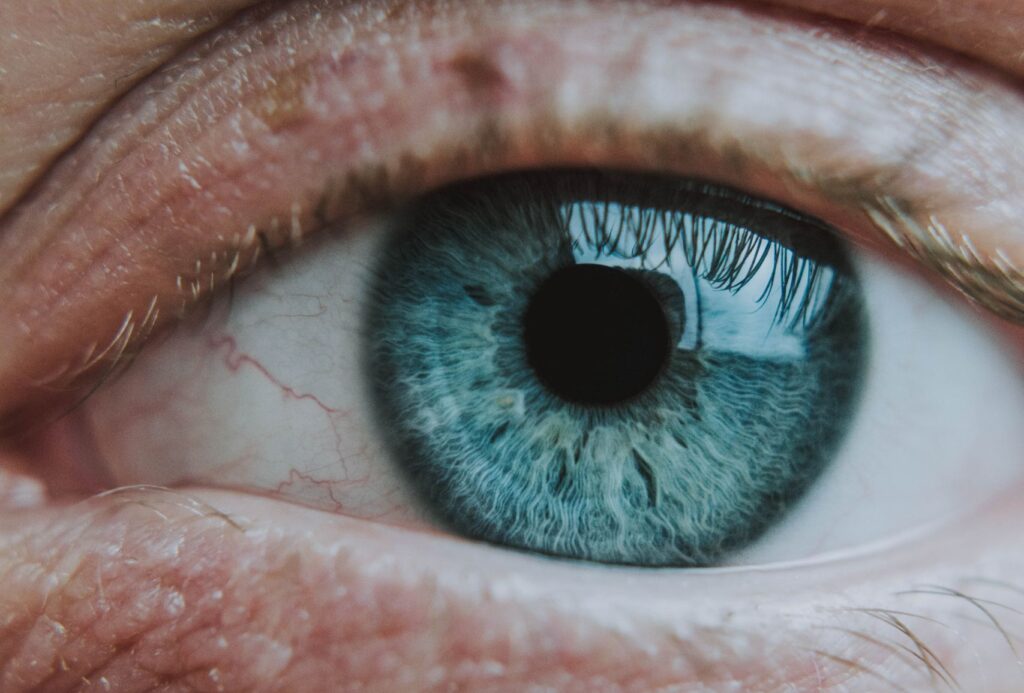
The iris is the coloured part of the eye surrounding the pupil. In general, more melanin in the iris makes eyes appear darker, while less melanin allows more light to scatter, creating lighter-looking colours. Blue eyes do not contain blue pigment; they appear blue because of how light interacts with the iris. Green and hazel eyes reflect a mix of pigment and light-scattering effects.
Can parents predict a child’s eye color?
Not with certainty. Eye colour is influenced by multiple genes inherited from both parents, so the old “brown is dominant, blue is recessive” rule is too simple to reliably predict a child’s eye colour. Parents’ and grandparents’ eye colours may provide clues, but they do not determine the outcome.
For example, two parents with the same eye colour can have a child whose irises look different from theirs. The child inherits a combination of genetic variants—not a direct blend of the parents’ visible eye colours.
Common eye colors and variations
Brown eyes
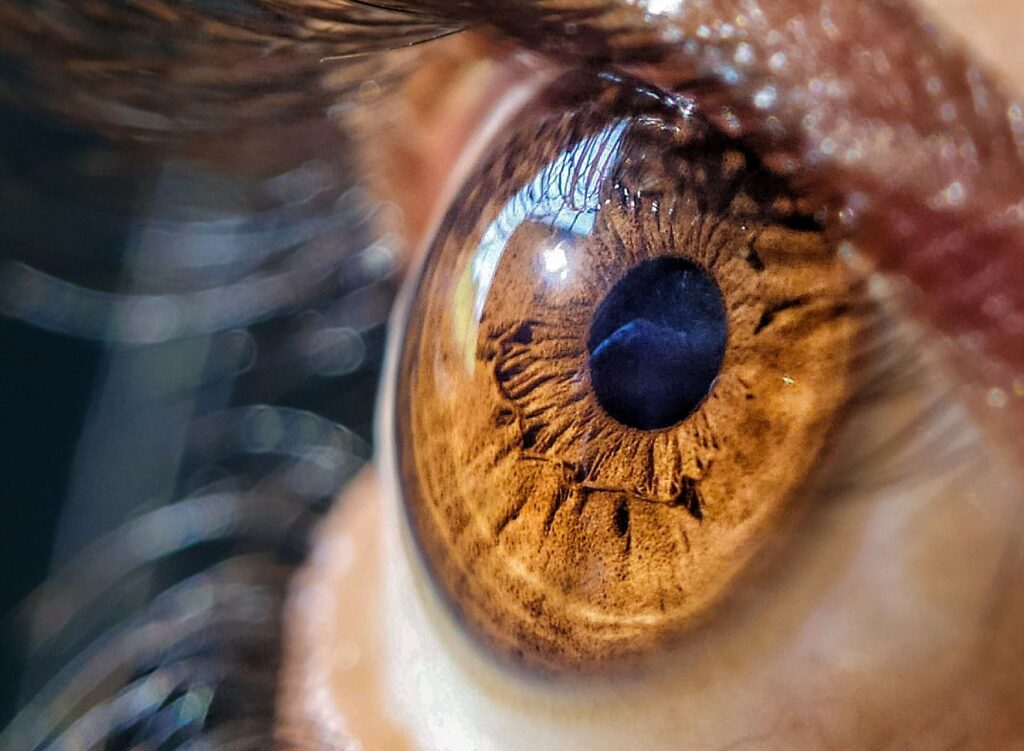
Brown is the most common eye colour worldwide. It results from greater amounts of melanin in the front layer of the iris. One study found an association between brown eyes and higher cataract risk compared with light eyes, but that finding does not mean eye colour alone predicts whether someone will develop cataracts. Regular eye exams remain important for everyone.
Blue eyes
Blue eyes have little or no pigment in the front layer of the iris. Their colour comes from the way light scatters within the iris, rather than from blue pigment.
Green and hazel eyes
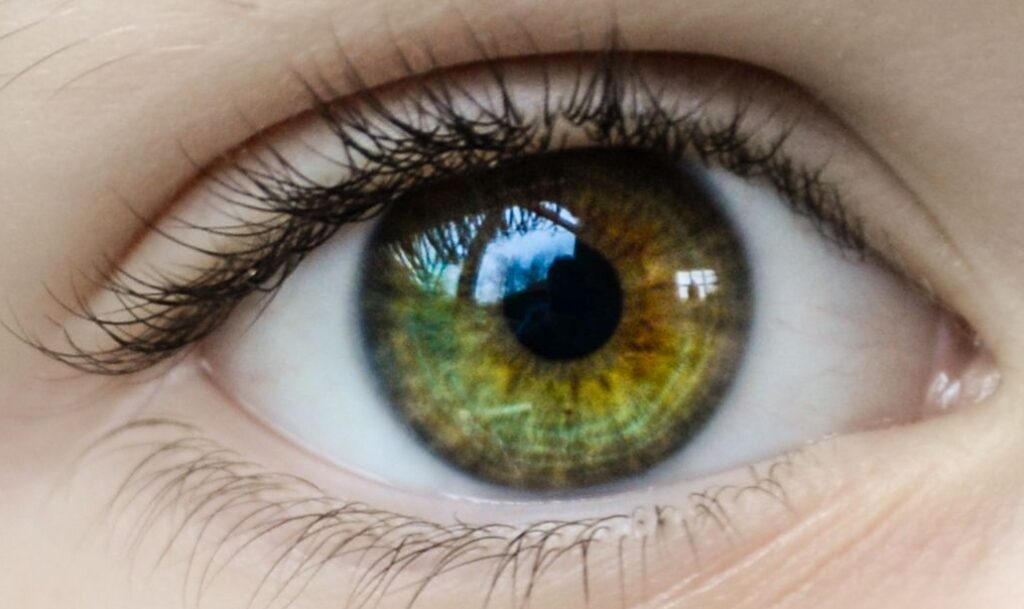
Green and hazel eyes reflect a combination of pigment and light scattering. The amount and distribution of pigment can vary across the iris, which is one reason these eyes may seem to shift in appearance under different lighting.
Red or pink appearance
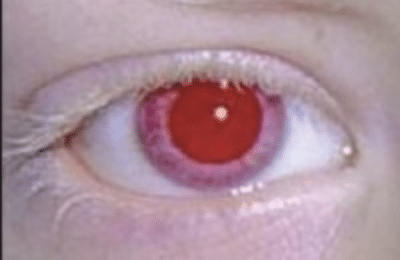
Albinism can reduce the amount of pigment in the eyes. In some people, low iris pigment can allow underlying blood vessels to show through, making the eyes appear reddish or pink in certain lighting. Albinism can also affect vision, so an eye-care professional should assess concerns about pigment or vision.
Two different iris colours

Heterochromia means that the irises—or parts of an iris—have different colours. It may be present at birth or develop later. A new or changing difference in eye colour should be assessed by an ophthalmologist to check for an underlying cause.
Can a baby’s eye color change?
Yes. A baby’s eye colour can change as pigment develops during early childhood. Eyes that appear blue or grey at birth may darken as melanin accumulates in the iris. The timing and final colour vary from child to child.
When should you book an eye exam?
A difference in appearance caused by lighting or pupil size is not necessarily a true change in iris colour. But if you notice a distinct new change—especially in one eye, or alongside pain, redness, light sensitivity or altered vision—contact an eye-care professional for an assessment.
At North Toronto Eye Care, our team can assess changes in your eyes and help determine whether further evaluation is needed.
References
- American Academy of Ophthalmology. Eye Color: Unique as a Fingerprint.[aao]
- Simcoe M, et al. Genome-wide association study in almost 195,000 individuals identifies 50 previously unidentified genetic loci for eye color. Science Advances. 2021;7(11):eabd1239. doi:10.1126/sciadv.abd1239. PubMed record.[pmc.ncbi.nlm.nih]
- American Academy of Ophthalmology. Why Are Brown Eyes Most Common?.[aao]
- American Academy of Ophthalmology. Your Blue Eyes Aren’t Really Blue.[aao]
- American Academy of Ophthalmology. What Is Albinism?.[aao]
- American Academy of Ophthalmology. Heterochromia.[aao]
- American Academy of Ophthalmology. Why Are My Eyes Changing Color?.[aao]