



Eye Exam,Eye Health,Featured,Medical News
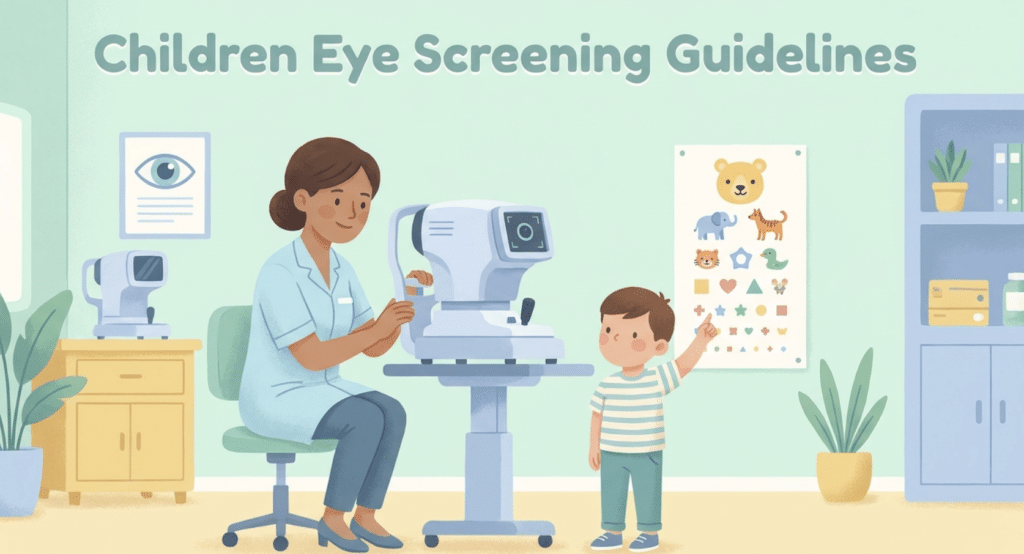
Clear vision helps children learn, play, and confidently explore the world around them. Yet many children do not realize they have a vision problem because they assume everyone sees the same way they do.
Regular eye screenings and comprehensive paediatric eye exams can identify issues early—when treatment is often most effective.
Why Children Need Regular Eye Screenings
Vision develops rapidly during infancy and early childhood. Healthy eyesight supports hand-eye coordination, reading, depth perception, sports, and classroom learning.
Children rarely complain about blurry vision. Instead, they may squint, sit very close to screens, avoid reading, or struggle with coordination. Early screening helps detect concerns such as lazy eye, crossed eyes, and uncorrected prescriptions before they affect development.
Children’s Eye Screening Schedule
Vision screenings are quick, non-invasive checks that can be performed by a pediatrician, family doctor, school nurse, or eye care professional. If a screening raises a concern, your child should be referred for a comprehensive eye examination.
| Age | What Is Checked | Why It Matters |
|---|---|---|
| Newborn | Red reflex, pupil response, and eye structure | Detects congenital cataracts and other serious eye conditions |
| 6 to 12 months | Eye alignment, tracking, and visual responsiveness | Identifies misalignment or delayed visual development |
| 12 to 36 months | Photoscreening and amblyopia risk factors | Can reveal “lazy eye” risk factors before a child can read an eye chart |
| 3 to 5 years | Visual acuity, eye alignment, and depth perception | Detects refractive errors, strabismus, and amblyopia |
| 5 years and older | Distance and near vision, focusing, and eye coordination | Monitors myopia, farsightedness, and reading-related vision concerns |
In Ontario, routine eye exams with an optometrist are covered by OHIP for children, making regular pediatric eye care accessible for local families.
Vision Screening vs. Comprehensive Eye Exam
A vision screening is a useful first step, but it is not a complete eye exam. Screenings identify children who may need further assessment; a comprehensive pediatric eye exam evaluates the full health and function of the eyes.
A comprehensive exam may include:
- A review of your child’s medical and family eye history.
- Testing of visual acuity at near and far distances.
- Assessment of eye alignment, focusing, and depth perception.
- Dilating eye drops to examine the retina, optic nerve, and internal eye structures.
- A prescription check for glasses, if needed.
Your child may need a comprehensive exam if they fail a vision screening, show signs of an eye turn or lazy eye, have a family history of childhood eye disease, or have a medical condition that can affect vision.
Vision Milestones by Age
Newborn to 12 Months
During the first months of life, babies gradually learn to focus, follow moving objects, and use both eyes together. Some occasional eye crossing or wandering is common in the earliest weeks, but persistent misalignment after about three months should be assessed.
By five to eight months, most babies develop depth perception and begin reaching accurately for toys. Crawling, pulling to stand, and improved hand-eye coordination are also important visual-motor milestones.
Toddlers and Preschoolers
Between ages three and five, children become better at puzzles, drawing, copying shapes, and recognizing pictures or letters. Eye alignment and focusing skills continue to mature, supporting early literacy and classroom readiness.
School-Age Children
From age five onward, children rely heavily on clear vision for reading, writing, sports, and screen-based learning. This is also when nearsightedness, or myopia, often begins or progresses.
Common Childhood Eye Conditions
Refractive Errors
Refractive errors occur when the eye does not focus light properly on the retina.
- Myopia (nearsightedness): Distance vision is blurry, while near vision is clearer.
- Hyperopia (farsightedness): The eye must work harder to focus, particularly at close distances.
- Astigmatism: An irregular corneal or lens shape causes blurred or distorted vision at multiple distances.
Strabismus and Amblyopia
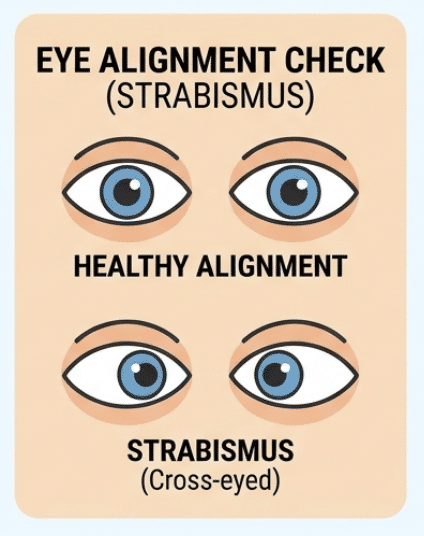
Strabismus, commonly called crossed eyes, occurs when the eyes do not point in the same direction. One eye may turn inward, outward, upward, or downward. Early treatment is important because the brain may begin to ignore input from the misaligned eye.
Amblyopia, or “lazy eye,” develops when the brain favours one eye over the other. It can be caused by a significant prescription difference, strabismus, drooping eyelid, or cataract. When detected early, amblyopia can often be treated with glasses, patching, or medicated eye drops.
North Toronto Eye Care provides specialized paediatric care for conditions including high myopia, strabismus, and other visual impairments.
Warning Signs of Vision Problems in Children
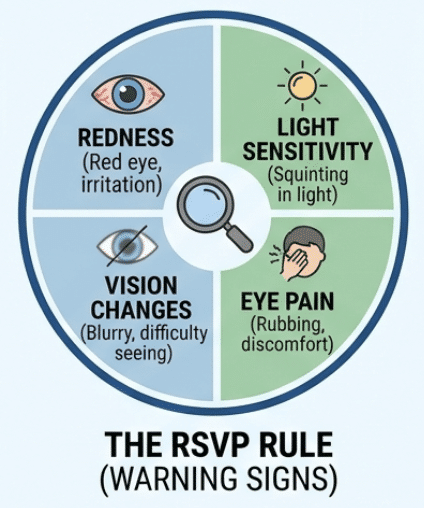
Watch for changes in your child’s eyes, behaviour, or learning. The “RSVP” rule is a simple way to remember important warning signs:
- R — Redness: Persistent redness, swelling, or irritation.
- S — Sensitivity: Unusual light sensitivity, tearing, or squinting.
- V — Vision changes: Blurry vision, frequent eye rubbing, or difficulty seeing the board.
- P — Pain: Eye pain, soreness, headaches, or discomfort.
Other signs include covering or closing one eye, tilting the head, losing place while reading, sitting very close to screens, poor coordination, or an unusual white or asymmetrical reflection in photos.
Seek urgent medical care if your child has sudden vision loss, significant eye pain, a painful swollen eye with fever, or an abnormal white pupil reflection.
Protecting Your Child’s Vision at Home
Manage Screen Time
Digital devices are part of modern learning, but extended near work can contribute to eye strain. Encourage the 20-20-20 rule: every 20 minutes, have your child look at something at least 20 feet away for 20 seconds.
Avoid screens in the hour before bedtime, as evening screen use can interfere with sleep. Blue light from screens is not known to damage children’s eyes, but healthy screen habits still matter.
Encourage Outdoor Play
Spending time outdoors may help reduce the risk of developing myopia. Natural light and looking at distant objects give children’s eyes a valuable break from close-up work.
Use Protective Eyewear
Children who play baseball, basketball, hockey, racquet sports, or other high-impact activities should wear sport-specific protective eyewear with polycarbonate lenses. Regular prescription glasses are not designed to protect against sports-related eye injuries.
Book a Pediatric Eye Exam
Early detection is one of the most important ways to protect your child’s sight, learning, and confidence. Whether your child is due for a routine exam, struggling in school, or showing signs of a vision problem, our team can help.
At North Toronto Eye Care, our ophthalmologists provide advanced pediatric eye care using specialized diagnostic technology for children with complex or progressive vision concerns.
Is your child due for an eye exam? Contact North Toronto Eye Care today to schedule a pediatric eye appointment.
References
- American Academy of Ophthalmology. Eye Screening for Children.
- American Academy of Ophthalmology. Vision Development: Newborn to 12 Months.
- American Academy of Ophthalmology. Vision Development in Childhood.
- American Academy of Ophthalmology. Common Eye Problems in Children.
- American Academy of Ophthalmology. Childhood Eye Diseases and Conditions.
- City of Toronto. Vision Health for School-Age Children.[toronto]
- Ontario Association of Optometrists, cited by City of Toronto. Children’s Vision Testing Recommendations.[toronto]