



Cataract,Eye Exam,Eye Health,Intraocular Lens
If you live with diabetes, you may already know it can affect the retina. But diabetes can also affect the eye’s natural lens, increasing the risk of cataracts and causing them to develop earlier or progress more quickly.
The good news is that cataracts are treatable, and healthy diabetes management along with regular eye exams can help protect your vision. At North Toronto Eye Care, we provide comprehensive cataract assessments and diabetes-related eye care for patients.
What Is a Cataract?
A cataract is a clouding of the eye’s natural lens. The lens is normally clear and helps focus light onto the retina so you can see sharply.
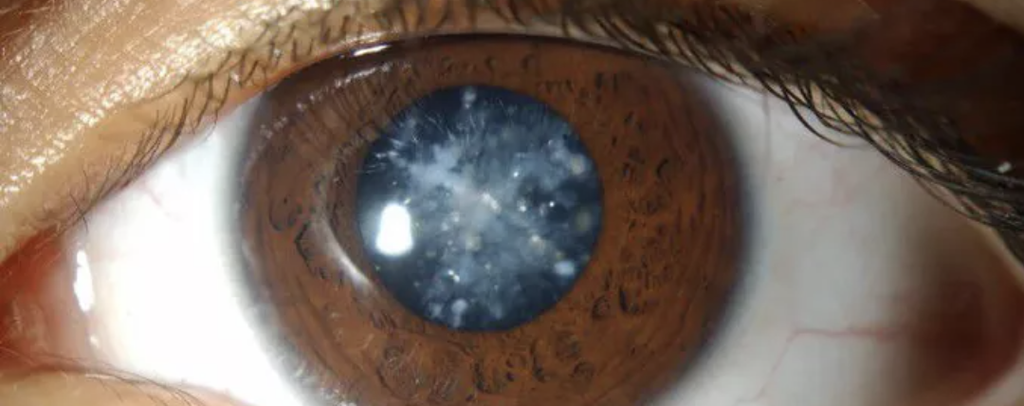
As a cataract develops, the lens becomes cloudy or yellowed. This can make vision appear blurry, dim, faded, or distorted. Common symptoms include glare and halos around lights, difficulty seeing at night, frequent changes in glasses prescription, and reduced colour vividness.
Cataracts are common with aging, but diabetes is an important additional risk factor. People with diabetes are more likely to develop cataracts, and cataracts may occur at a younger age.
How Does Diabetes Cause Cataracts?
The connection between diabetes and cataracts is primarily related to high blood sugar levels over time.
The lens receives nutrients, including glucose, from the aqueous humour—the clear fluid inside the front of the eye. When blood glucose is consistently elevated, excess sugar can enter the lens and trigger changes that reduce its clarity.
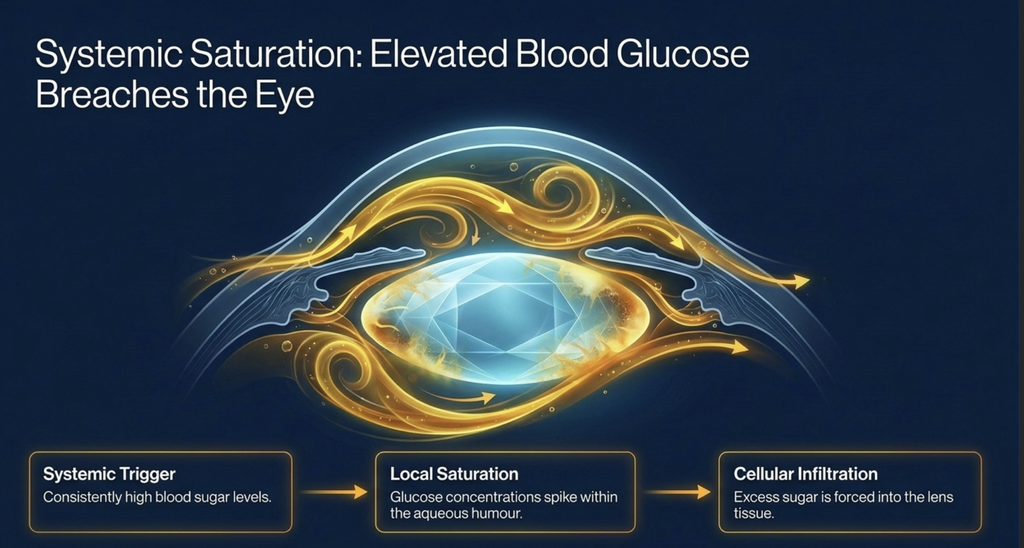
The science behind it
- Excess glucose enters the lens. High blood sugar increases glucose levels in the aqueous humour and lens, causing the lens to swell. This swelling can temporarily change the lens focus and cause blurred vision.
- Glucose is converted into sorbitol. An enzyme in the lens converts some glucose into sorbitol, a sugar alcohol. Sorbitol can accumulate within lens cells because it does not easily leave them.
- Lens proteins become damaged. As sorbitol builds up, it disrupts the normal structure and organization of lens proteins. Over time, this makes the lens less clear and more opaque.
- A cataract forms. These cumulative changes can cause the lens to become cloudy, leading to hazy, yellowed, or faded vision and increased glare.
People with diabetes may also have a higher cataract risk when diabetes has been present for many years, blood sugar control is suboptimal, or diabetic retinopathy is present. Research has identified higher HbA1c, longer diabetes duration, and retinopathy as important risk factors for cataract in people with diabetes.
Symptoms to Watch For
Contact your eye doctor if you notice:
- Blurry or cloudy vision that does not fully improve with new glasses
- Increased sensitivity to light, glare, or halos around lights
- Difficulty driving at night
- Faded, dull, or yellowed colours
- Frequent changes in your glasses or contact lens prescription
- Double vision in one eye
These symptoms can be caused by cataracts, but they can also result from diabetes-related retinal disease or other eye conditions. A comprehensive eye examination is needed to determine the cause.
Can Diabetes-Related Cataracts Be Prevented?
Cataracts cannot be reversed once they form, and cataract surgery is the only treatment that removes the clouded lens. However, people with diabetes can take steps to reduce their risk or delay progression.
1. Maintain healthy blood sugar levels
Consistent glucose control is the most important modifiable step. Stable blood sugar levels help reduce lens swelling, limit sorbitol accumulation, and may slow cataract progression.
Work with your family physician, endocrinologist, or diabetes care team to follow your individualized targets for blood glucose and HbA1c. A systematic review found that glycemic control was the only consistently modifiable risk factor for cataract development in type 2 diabetes.
2. Schedule regular diabetic eye exams
Diabetes Canada recommends that people with diabetes have an eye exam at least once a year, unless their optometrist or ophthalmologist recommends a different schedule.
Regular exams allow your eye care team to:
- Detect cataracts early
- Monitor for diabetic retinopathy and macular edema
- Track changes in your lens and vision
- Recommend treatment before vision loss affects daily activities
Diabetic eye exams are especially important because early diabetic retinopathy often causes no symptoms.
3. Manage blood pressure and overall health
High blood pressure, kidney disease, and other diabetes-related complications can contribute to a higher risk of eye disease. Following your diabetes “ABCDEs”—A1c, blood pressure, cholesterol, drugs, and exercise/smoking cessation—supports both systemic and ocular health.
4. Protect your eyes from UV exposure
UV exposure is another risk factor for cataracts. Wear sunglasses with 100% UV protection outdoors and a wide-brimmed hat when appropriate.
5. Avoid smoking
Smoking increases the risk of cataracts and can worsen diabetes-related damage to the retina and optic nerve. Quitting smoking is one of the most meaningful steps you can take for long-term eye health.
When Is Cataract Surgery Needed?
Cataract surgery may be recommended when clouding of the lens interferes with reading, driving, work, or everyday activities. During surgery, the cloudy natural lens is removed and replaced with a clear artificial intraocular lens (IOL).
For patients with diabetes, careful pre-operative assessment is particularly important. Diabetes can increase the risk of post-operative macular edema or progression of diabetic retinopathy, so your ophthalmologist may coordinate care with your diabetes specialist and monitor your retina closely after surgery.
Protect Your Vision With North Toronto Eye Care
Diabetes and eye health are closely connected, but early detection makes a difference. If you have diabetes and have not had an eye exam in the past year—or if you are noticing blurred vision, glare, or difficulty seeing at night—schedule a comprehensive eye examination.
North Toronto Eye Care provides cataract evaluation, cataract surgery, and care for diabetes-related ocular complications.
References
- American Academy of Ophthalmology. Diabetes and Cataracts: Causes, Risks, and Prevention Tips.[aao]
- American Academy of Ophthalmology. Diabetes and Cataracts.[aao]
- American Diabetes Association. Cataracts & Diabetes: Causes, Prevention & Treatment.[diabetes]
- American Diabetes Association. Diabetes Eye Disease.[diabetes]
- Diabetes Canada. Eye Damage (Diabetic Retinopathy).[diabetes]
- Zhao L et al. Meta-analysis of the risk of cataract in type 2 diabetes. BMC Ophthalmology. 2014.[link.springer]
- Kiziltoprak H et al. A systematic review of risk factors for cataract in type 2 diabetes mellitus. Diabetes/Metabolism Research and Reviews. 2019.[onlinelibrary.wiley]