



Cataract,Eye Exam,Eye Health,Glaucoma,Retina

Most people think of their eyes as simple focusing tools—something that either works well or needs glasses. But research shows something far more important: your eyes are closely connected to your brain, and changes in vision may signal changes in cognitive health.
A long-term study following over 1,200 adults for 16 years found a strong link between vision loss and cognitive decline. In fact, older adults with impaired vision were found to have up to twice the risk of developing dementia or Alzheimer’s disease compared to those with healthy eyesight.
This shifts the role of a routine eye exam. It’s not just about updating your prescription—it may also help identify early signs of neurological changes.
Why Vision Changes Matter
Common age-related eye conditions such as cataracts, glaucoma, and macular degeneration don’t just affect how you see—they may also reflect what’s happening in the brain.
Because the retina is an extension of the central nervous system, subtle visual changes can sometimes appear before noticeable cognitive symptoms. Regular comprehensive eye exams allow us to monitor these changes early.
Three Vision Changes Linked to Cognitive Decline
Research highlights three key visual functions that may act as early warning signs:
- Visual acuity (sharpness): Blurred distance vision has been associated with declines in memory and language skills.
- Contrast sensitivity: Difficulty distinguishing objects from similar backgrounds (e.g., seeing steps, curbs, or faces in low light) is the strongest predictor and is linked to multiple areas of cognitive decline.
- Depth perception: Trouble judging distances may also correlate with reduced memory and language function.
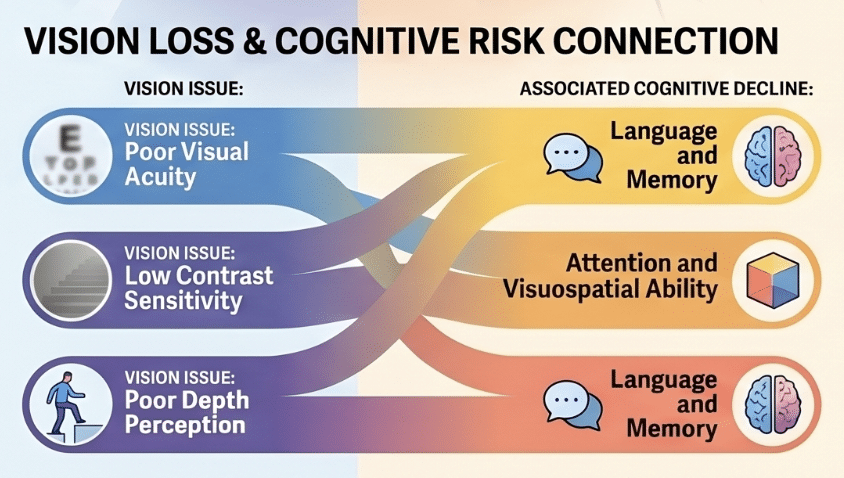
Among these, reduced contrast sensitivity is particularly important. If you find yourself needing more light or struggling in low-contrast environments, it’s worth having your eyes assessed.
The Eye–Brain Connection
Researchers are still exploring whether vision loss causes cognitive decline or vice versa. Current evidence suggests the relationship goes both ways.
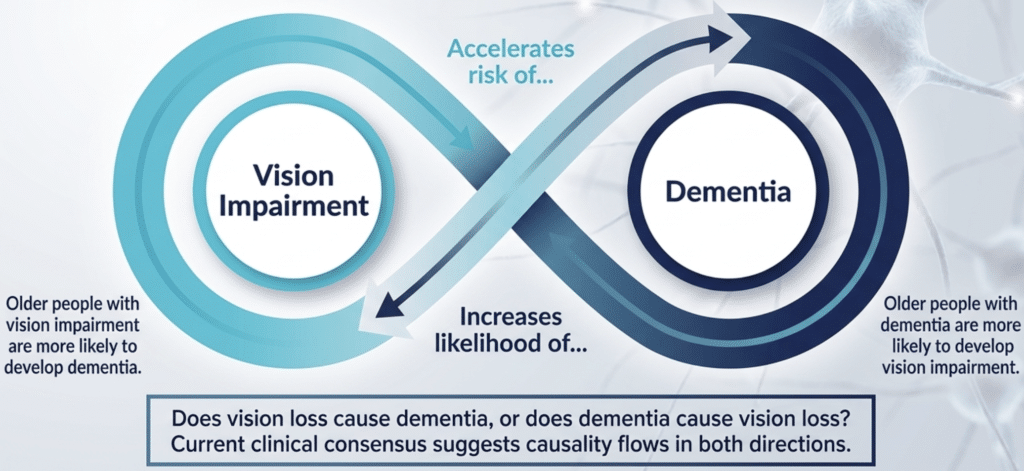
Some shared factors may include:
- Vascular disease affecting both the eyes and brain
- Reduced sensory input leading to cognitive strain
- Increased risk of social isolation and depression with vision loss
There’s also a “sensory compound effect.” Studies show that individuals with both vision and hearing loss have a significantly higher risk of dementia than those with only one impairment—highlighting the importance of maintaining overall sensory health.
When Should You Get an Eye Exam?
Protecting your vision may also support long-term brain health. Current recommendations include:
- Age 65+: Eye exams every 1–2 years, or more frequently if advised
- Any age: Earlier assessment if you notice changes in vision, contrast sensitivity, or depth perception
A Proactive Approach to Healthy Aging
While research is ongoing, one message is clear: your eyes can offer valuable insight into your overall health—including your cognitive function.
At North Toronto Eye Care, we have comprehensive eye doctors and advanced diagnostic technology to detect early changes in eye health, helping you stay proactive not only about your vision, but your long-term well-being.
If it’s been a while since your last eye exam, this may be the right time to book one. Your eyes could be telling you more than you think.
References:
- https://www.aao.org/eye-health/news/elderly-aging-eye-exam-dementia-vision-alzheimer
- Varadaraj V, Munoz B, Deal JA, et al. Association of Vision Impairment With Cognitive Decline Across Multiple Domains in Older Adults. JAMA Netw Open. 2021;4(7):e2117416. doi:10.1001/jamanetworkopen.2021.17416