



Aesthetics,cornea,Dry Eye,Eye Exam,Eye Health,Featured,Medical News,Medical Technology,What's New
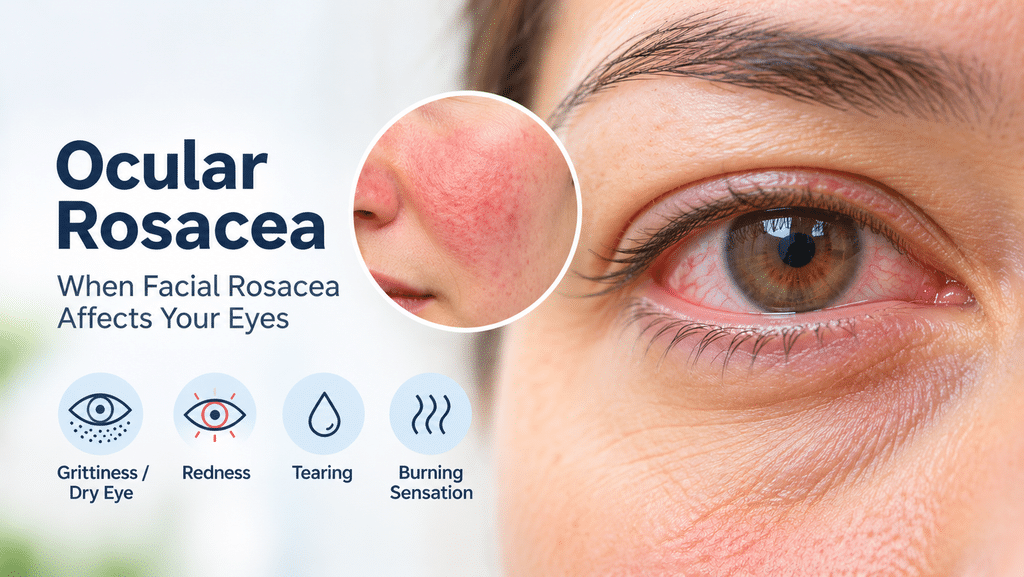
If you have rosacea, you may assume it only affects the skin on your face. But rosacea can also affect the eyelids, tear film, and surface of the eyes—a condition called ocular rosacea. For many people, burning, redness, grittiness, and fluctuating vision are not “just dry eye”; they may be signs that rosacea-related inflammation is affecting the eyes.
At North Toronto Eye Care, we often see patients whose eye irritation improves only after the underlying eyelid inflammation and meibomian gland dysfunction are addressed.
What Is Ocular Rosacea?
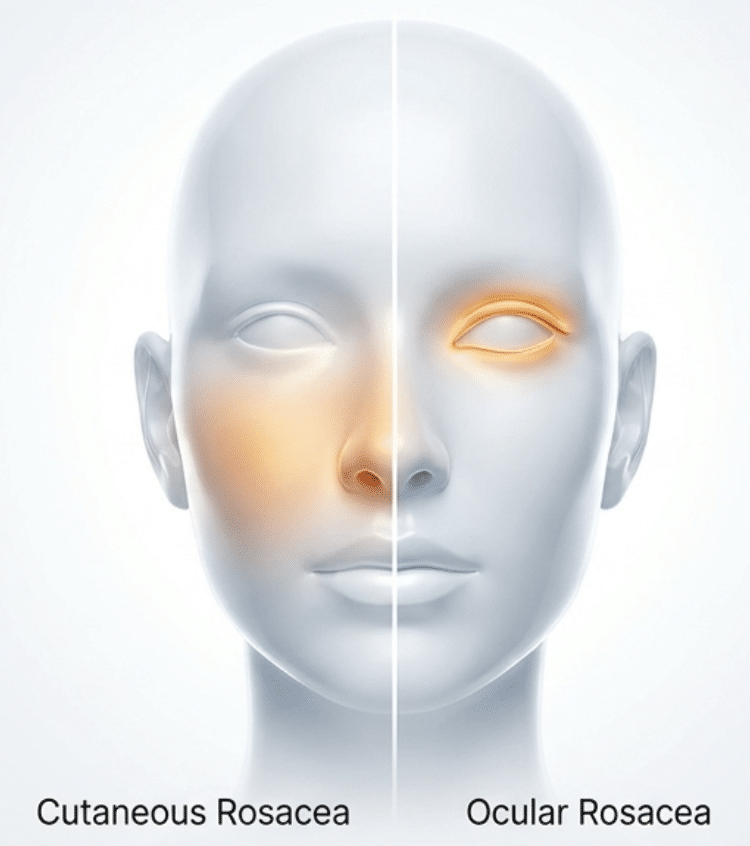
Rosacea is a chronic inflammatory condition that commonly affects the cheeks, nose, forehead, and chin. When it involves the eyes or eyelids, it is called ocular rosacea. It can occur alongside visible facial rosacea, but it can also appear before skin symptoms—or even without obvious facial redness.
Ocular rosacea is more than surface dryness. Inflammation around the eyelid margins can disrupt the tiny oil-producing meibomian glands, leading to an unstable tear film and evaporative dry eye.
Why Rosacea Irritates the Eyes
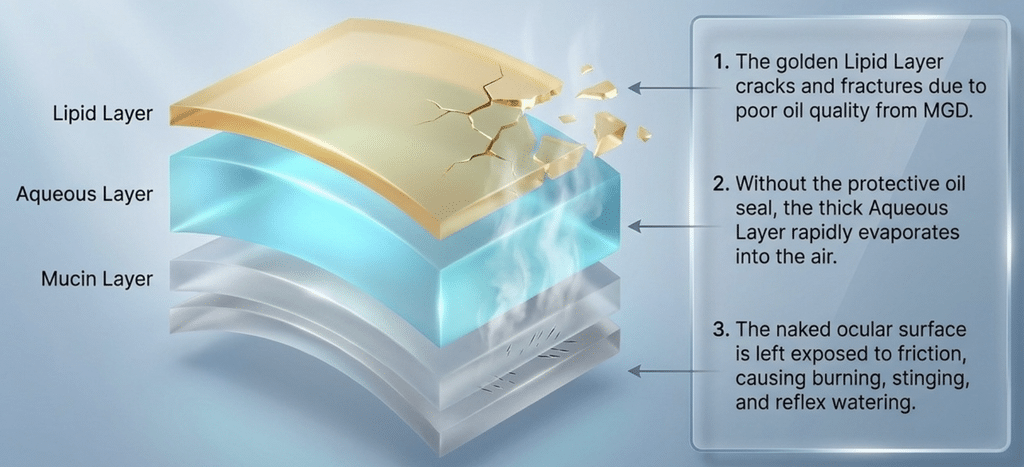
The meibomian glands are located within the eyelids and release oils that help prevent tears from evaporating too quickly. When rosacea causes inflammation, these glands can become blocked or dysfunctional, reducing the quality of the protective oil layer in the tears.
The result is a cycle that can be difficult to break without treatment:
Rosacea triggers inflammation along the eyelid margins.
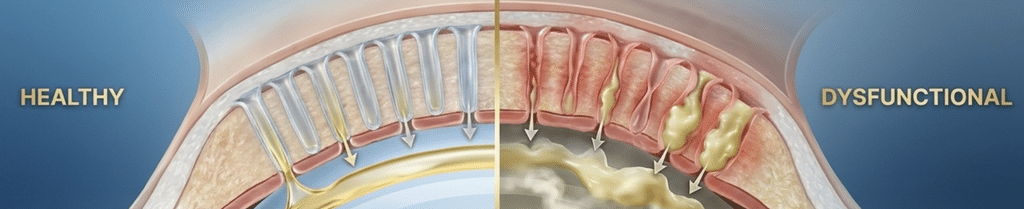
Meibomian glands become clogged or produce poor-quality oil.
Of the three tear film layers the lipid layer becomes unstable due to poor quality meibum. Tears evaporate too quickly, leaving the ocular surface exposed.
Ocular rosacea can feel similar to allergies, contact-lens discomfort, or ordinary dry eye. Common signs include:
- Red, burning, or watery eyes
- A gritty, sandy, or “something in my eye” sensation
- Dryness, stinging, or fluctuating vision
- Red, swollen, or crusty eyelids
- Sensitivity to light
- Recurrent styes or chalazia
- Clogged oil glands along the eyelid margins
Some people with ocular rosacea have very subtle skin signs, which is why an eye exam is important when symptoms persist.
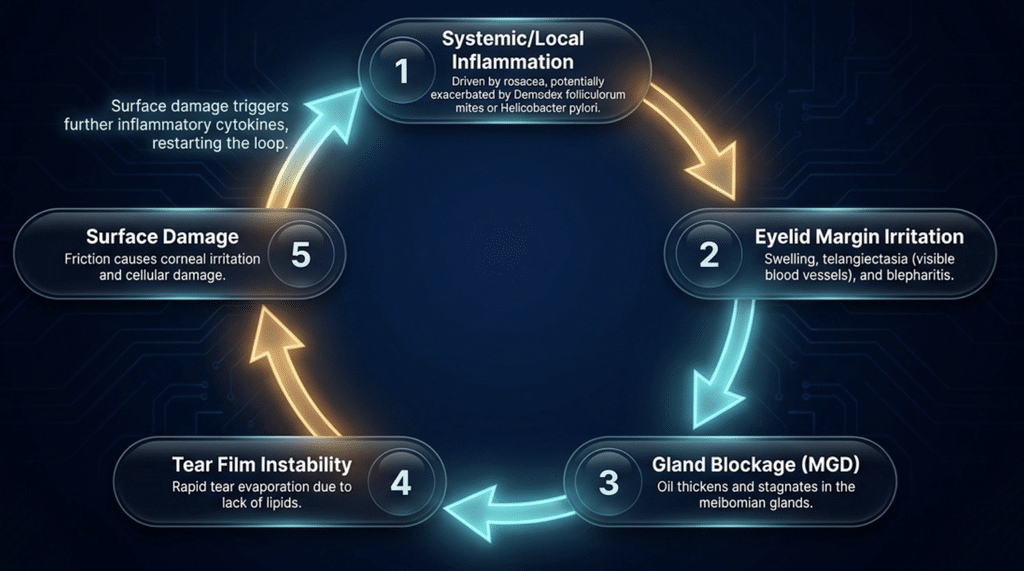
Chronic inflammation can worsen blepharitis, styes, chalazia, and dry eye.
When to Seek Care
Mild irritation may improve with consistent eyelid care and lubricating drops, but ocular rosacea should not be ignored if it keeps returning or affects daily comfort. The American Academy of Ophthalmology notes that rosacea-related eye disease can include eyelid inflammation, clogged oil glands, styes, and chalazia.
Arrange an eye examination if you have persistent redness, pain, light sensitivity, reduced vision, recurrent styes, or symptoms that do not improve with artificial tears. Severe or untreated inflammation can affect the cornea and may threaten vision in advanced cases.
How It Is Managed
Treatment is usually tailored to the severity of inflammation and the health of the meibomian glands. Common approaches include:
- Eyelid hygiene: Gentle cleansing of the eyelids and lashes helps remove debris and reduce inflammation.
- Warm compresses: When appropriate, warm compresses can soften oil and support meibomian gland function.
- Preservative-free artificial tears: Lubricating drops can relieve dryness and protect the ocular surface.
- Prescription anti-inflammatory treatment: An eye doctor may recommend topical anti-inflammatory drops or oral anti-inflammatory medication for more significant disease.
- Treatment of eyelid disease: Blepharitis, Demodex-related inflammation, and meibomian gland dysfunction may require targeted in-office or at-home treatment.
- IPL therapy: Intense pulsed light may be considered for rosacea-associated meibomian gland dysfunction and eyelid inflammation.
Avoid using “redness-relief” drops unless your eye doctor has recommended them. The American Academy of Ophthalmology cautions that these drops can worsen ocular rosacea symptoms.
Simple Habits That Can Help
Rosacea triggers vary from person to person, but many patients find that heat, sun exposure, wind, alcohol, spicy foods, and stress can aggravate symptoms. Identifying your personal triggers and protecting the eyelids from unnecessary irritation can help reduce flare-ups.
Helpful habits include:
- Use preservative-free artificial tears as directed by your eye care provider.
- Clean eyelids gently; avoid scrubbing or rubbing the eyes.
- Remove eye makeup thoroughly and avoid applying products to the waterline.
- Replace eye makeup regularly, especially mascara.
- Protect your eyes from wind, sun, and dry indoor air.
- Track possible triggers such as alcohol, spicy foods, heat, and stress.
When Dry Eye Is More Than Dry Eye
If you have rosacea and ongoing eye irritation, do not assume over-the-counter drops are enough. A comprehensive eye exam can determine whether blepharitis, meibomian gland dysfunction, ocular rosacea, allergies, or another condition is driving your symptoms.
At North Toronto Eye Care, we assess the eyelids, tear film, and meibomian glands to create a treatment plan aimed at both comfort and long-term eye-surface health.
References
- American Academy of Ophthalmology. Ocular Rosacea. [aao]
- American Academy of Dermatology. Rosacea: Diagnosis and treatment. [aad]
- American Academy of Dermatology. Do you have to treat rosacea? [aad]
- American Academy of Ophthalmology. Ocular Rosacea – EyeWiki. [eyewiki.aao]
- National Eye Institute. Facts About Dry Eye. [nei.nih]
- American Academy of Ophthalmology. Blepharitis Preferred Practice Pattern. [aao]
- National Rosacea Society. Standard Management Options for Rosacea. [rosacea]